What is syncX: Stock Sync?
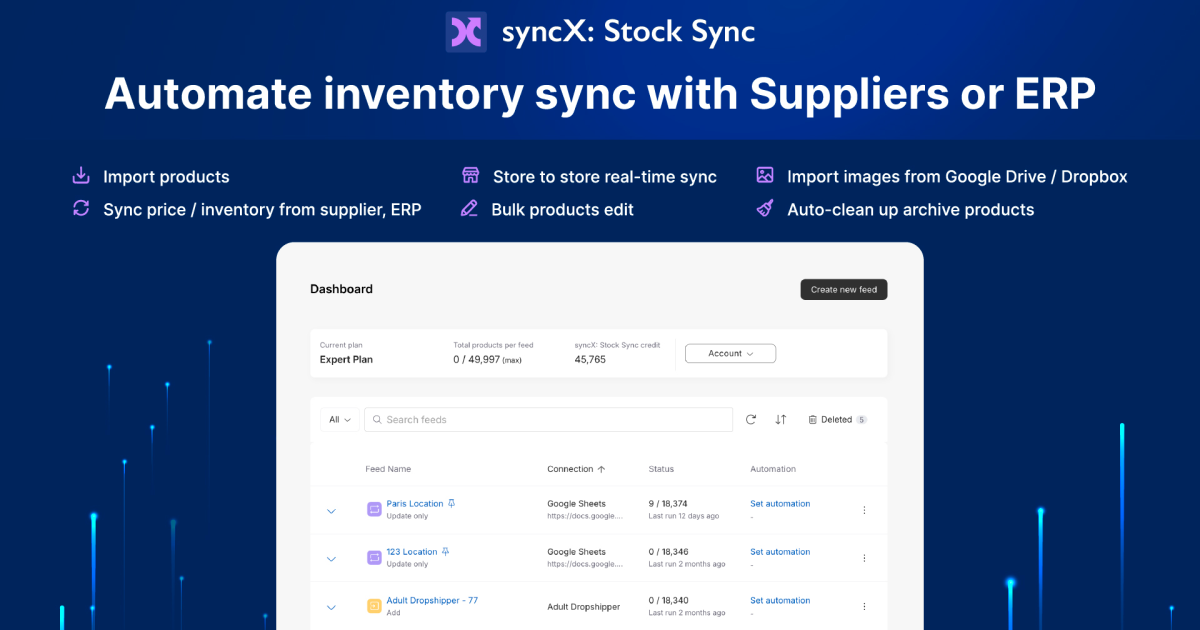
syncX: Stock Sync is ecommerce inventory management software for merchants working with multiple suppliers, stores, and high SKU volumes. Users connect supplier feeds, ERPs, APIs, files, or cloud data sources, map inventory and product fields, then set rules and schedules for automatic updates. It supports Shopify, WooCommerce, BigCommerce, Wix, Square, Squarespace, QuickBooks, and other platforms, with more than 80 connection methods on paid plans.
Why syncX: Stock Sync works
Manual stock updates break down once a store depends on several suppliers because one late feed can leave unavailable products for sale or force repeated reconciliation. syncX: Stock Sync maps supplier data into store fields and keeps changes moving on a schedule or in real time, so inventory follows the source instead of waiting for someone to fix a spreadsheet.
syncX: Stock Sync features
- Multi-source inventory sync. Keep stock aligned across multiple suppliers, warehouses, stores, and sales channels from one system.
- Flexible supplier connections. Bring in data through APIs, FTP or SFTP, Google Sheets, Dropbox, email feeds, spreadsheets, ERPs, and supplier inventory systems.
- Field mapping and update rules. Map supplier fields to store product fields, then set schedules, quantity rules, price rules, and other automatic updates.
- Bulk product management. Import new products and update inventory, pricing, images, metafields, categories, and other catalog data in bulk.
- Real-time and scheduled updates. Paid plans support real-time syncing, while scheduled updates range from daily runs to intervals as short as 10 minutes depending on the plan.
- Plans for different catalog sizes. The free plan supports up to 2,000 products with manual updates. Paid plans scale from smaller catalogs to unlimited product syncing and supplier feeds.
Who syncX: Stock Sync is for
- Dropshippers managing stock from several supplier feeds who need store availability to follow upstream inventory changes.
- Ecommerce brands selling through multiple stores or channels that need the same inventory data kept aligned.
- Inventory teams handling large SKU catalogs where manual product and stock updates create too much reconciliation work.
- Agencies managing several client stores that need repeatable inventory updates without maintaining separate spreadsheets.
Similar micro SaaS ideas you can build
- Restaurant menu availability publisher. A tool for multi-location restaurants that turns kitchen stock changes into automatic menu updates, hiding sold-out dishes across ordering channels before customers can buy them.
- Supplier catalog change inbox. A purchasing app that ingests vendor spreadsheets and feeds, normalizes SKUs and costs, then shows buyers exactly what changed before those updates reach the ERP or purchasing system.
- Tour capacity distributor. A small booking tool for tour operators that takes remaining capacity from one source of truth and updates websites and reseller channels, so the same final seats are not sold twice.