What is Can I Vibecode It??
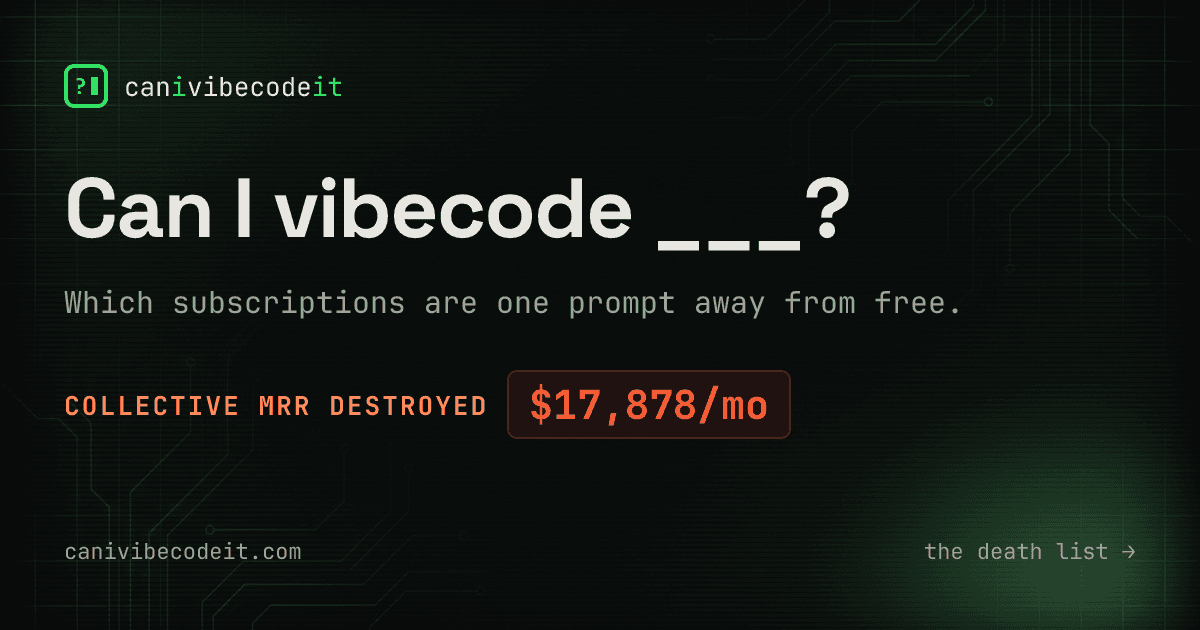
Can I Vibecode It is a free web directory for developers and SaaS users deciding whether to keep paying for an app or build a personal replacement. Search an app to get a YES, KINDA, or NOT REALLY verdict, then open a detail page with the exact AI coding prompt, expected build time, moat, prior art, and what you lose by leaving. The site currently covers 976 apps and can send prompts straight to Claude Code, Codex, or Cursor.
Why Can I Vibecode It? works
Most build or buy advice stops at whether a feature is technically possible, which hides the integrations, data, and support that make a paid product hard to leave. Can I Vibecode It pairs a buildability verdict with a working prompt and a blunt loss list, so users test a scoped replacement instead of mistaking a feature checklist for the whole product.
Can I Vibecode It? features
- Honest replacement verdicts. Each app gets YES, KINDA, or NOT REALLY based on whether an AI coding agent can make a usable personal version in one session, over a weekend, or not without the product's network, data, or infrastructure.
- Exact build prompts. Every buildable app page includes a ready to copy prompt and links that prefill it in Claude Code, Codex, and Cursor.
- Clear tradeoff notes. Detail pages explain why people still pay and list what disappears after replacement, including sync, mobile access, integrations, or hosted support.
- Search and verdict filters. Users can search 976 apps, browse category pages, and filter the Death List by verdict and team size before sorting by replacement votes.
- Public usage analytics. The site publishes page views, unique visitors, and prompt copy or open in agent clicks using first party analytics refreshed every minute.
Who Can I Vibecode It? is for
- Solo founders reviewing recurring SaaS bills who want a scoped build prompt before starting a personal replacement.
- Developers using Claude Code, Codex, or Cursor who want concrete requirements instead of reverse engineering a product from scratch.
- Small teams deciding whether a tool's value comes from its core workflow or from integrations, data, polish, and support.
- Open source users who want prior art and a clear loss list before moving away from a hosted SaaS app.
Similar micro SaaS ideas you can build
- Workflow automation feasibility checker. An intake tool for operations managers that turns a repetitive manual process into a scoped automation brief, then flags the steps that still need human judgment before anyone starts building.
- Spreadsheet replacement planner. A tool for finance and operations teams that maps a fragile spreadsheet workflow into a small internal app spec, with migration steps and a list of formulas, approvals, and edge cases that could be lost.
- Vendor API dependency migration scorecard. A tool for engineering leads that scans a codebase's usage of a vendor API, such as a payments, auth, or email provider, compares it against a replacement, and produces a migration risk brief listing feature parity gaps, rate limit differences, and production edge cases that could break on cutover.