What is The Problem Desk?
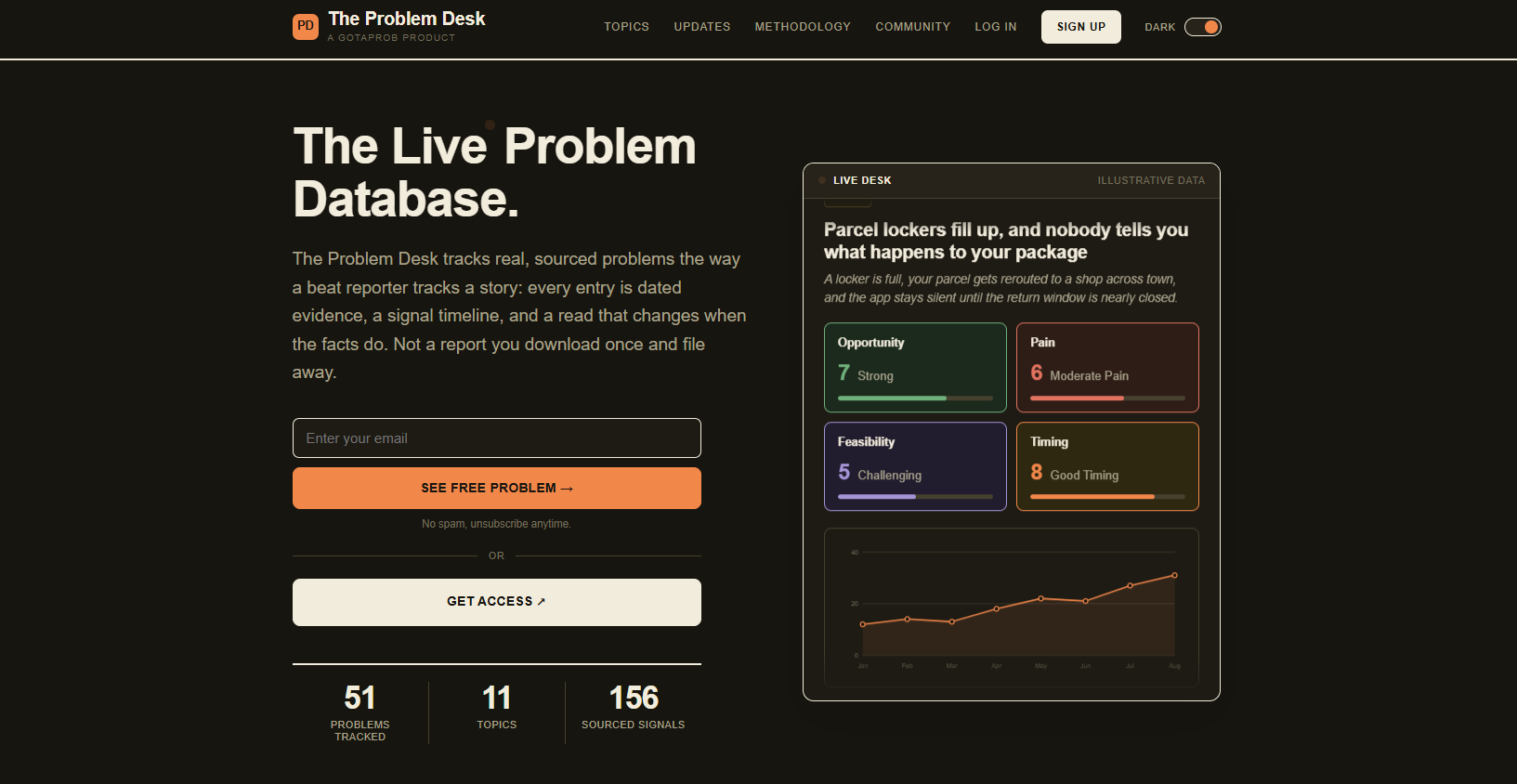
The Problem Desk is a live research database for builders deciding which problems are worth pursuing. Each problem combines dated source links, a signal timeline, four 0 to 10 scores for opportunity, pain, feasibility, and timing, plus a status that can change as new evidence arrives. The Desk currently tracks 51 problems across 11 topics with 156 sourced signals, and members get access to the full reads, data, and documents.
Why The Problem Desk works
A static market report can go stale as soon as a new regulation, competitor move, or study changes the picture. The Problem Desk keeps each problem tied to dated evidence and revises its scores, status, and human written read when meaningful signals arrive. It shows how an opportunity is moving instead of freezing one research snapshot in time.
The Problem Desk features
- Dated source trail. Every signal carries its source and publication date, with evidence drawn from government data, filings, regulations, studies, articles, competitor moves, and forum posts.
- Four score problem assessment. Each topic receives 0 to 10 scores for Opportunity, Pain, Feasibility, and Timing, with a short justification behind each number.
- Changing opportunity states. Topics move between Open, Heating Up, Crowded, and Improving as scores and new signals change the underlying picture.
- Human written synthesis. Scores and reads are judgment calls grounded in the collected evidence rather than outputs generated automatically by a model.
- Weekly research review. The Desk is reviewed weekly, while individual topics are updated when something meaningful changes rather than on a fixed publishing schedule.
Who The Problem Desk is for
- Builders deciding which problem to pursue who want evidence beyond a recent Reddit thread or isolated complaint.
- GotAProb community members using the research to compare notes and pressure test ideas built around documented problems.
- People tracking a problem over time who need to see whether it is getting worse, attracting competitors, or being fixed by the underlying system.
Similar micro SaaS ideas you can build
- Supplier risk watch for small manufacturers. A research service that tracks recalls, regulatory actions, supplier changes, and other dated signals around critical vendors. Each supplier gets a changing risk assessment so purchasing teams can revisit a sourcing decision before a disruption becomes urgent.
- Expansion signal tracker for local operators. A tool for restaurant groups, clinics, and other multi location operators that follows evidence around potential markets, then updates the case for each location as new openings, closures, regulations, and demand signals appear.
- Policy opportunity monitor for regulated industries. A focused intelligence product that follows proposed rules, new regulations, filings, and studies around one industry. It keeps a live assessment of which changes create an opening worth acting on, so teams follow an evolving evidence trail instead of rereading scattered updates.