What is Gixo Arc?
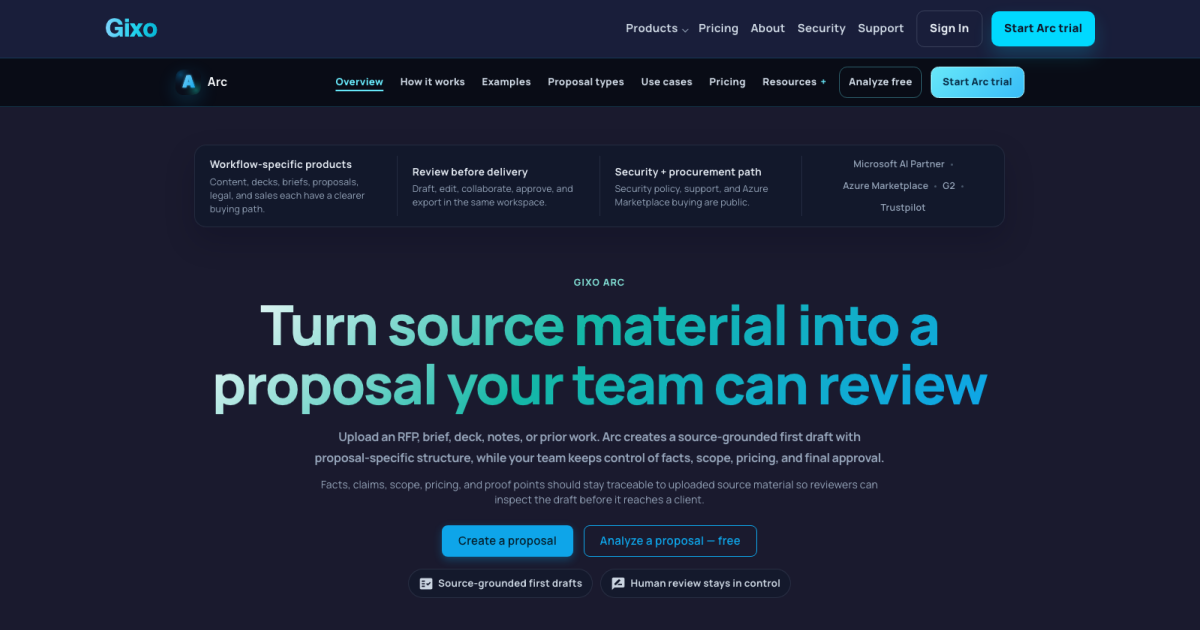
Gixo Arc is an AI proposal drafting workspace for sales, services, consulting, and RFP teams working from existing opportunity material. Users choose one of 21 proposal types, upload RFPs, briefs, SOWs, decks, notes, emails, or prior work, and get a structured first draft shaped by the selected proposal type. The draft stays editable for human review, with export to PDF, DOCX, HTML, or plain text.
Why Gixo Arc works
Proposal work breaks when facts, scope, pricing, and proof are buried across RFPs, decks, notes, and old files, leaving reviewers to hunt for what supports each claim. Arc drafts from that source pack, applies proposal specific structure, and flags unsupported claims and mechanical review issues before export, so reviewers inspect a traceable draft instead of reconstructing one from scattered documents.
Gixo Arc features
- Draft from real source material. Upload PDF, DOCX, TXT, CSV, XLSX, PNG, JPG, EML, and MSG files. OCR backed extraction pulls context from RFPs, SOWs, emails, scans, and reference documents into the drafting flow.
- Use proposal specific structure. Choose from 21 proposal types across sales, consulting, RFP responses, grants, renewals, partnerships, government work, research, and technology implementation. Each type carries its own structure and tone guidance.
- Catch review issues before export. A deterministic quality pass can flag unsupported claims, unsupported high risk claims, placeholder text, duplicate answers, and word or character limit breaches before the team releases a draft.
- Keep humans in the approval loop. The workspace keeps facts, scope, pricing, commitments, and final approval with named reviewers. Arc does not invent pricing, timelines, or commitments that were not supplied.
- Export and share reviewed drafts. Export proposals as PDF, DOCX, HTML, or plain text. Arc also supports recipient specific tracked links with view or download permissions, optional expiry and passwords, plus open and download history.
Who Gixo Arc is for
- Agencies turning client briefs, RFPs, scopes, approved case studies, and pricing assumptions into a proposal draft that still needs account and commercial review.
- Consultants organizing discovery, methodology, workstreams, deliverables, governance, and fee assumptions into an engagement proposal for partner review.
- B2B sales teams combining discovery notes, buyer priorities, approved proof, scope, and pricing assumptions into a buyer specific proposal.
- Startup founders producing customer, partner, services, or funding related proposals without a dedicated proposal team.
- RFP teams organizing buyer requirements, capability material, implementation plans, approved evidence, and commercial notes into a reviewable response with visible gaps.
Similar micro SaaS ideas you can build
- Acquisition diligence memo builder. A workspace for small acquisition teams that turns data room files, management answers, financial notes, and research into an investment memo with evidence attached to each material claim. Missing support and unresolved diligence questions stay visible before the buyer makes a decision.
- Construction change order evidence pack. A tool for contractors that combines site notes, RFIs, emails, photos, estimates, and scope documents into a change order narrative with the supporting record attached. It helps project managers show what changed and why instead of rebuilding the history from scattered files.
- Incident review report builder. A tool for software teams that turns incident timelines, logs, chat excerpts, tickets, and engineer notes into a structured post incident review. It separates supported findings from open questions so reviewers can focus on causes and follow up work instead of assembling the document by hand.