What is FixRAgent?
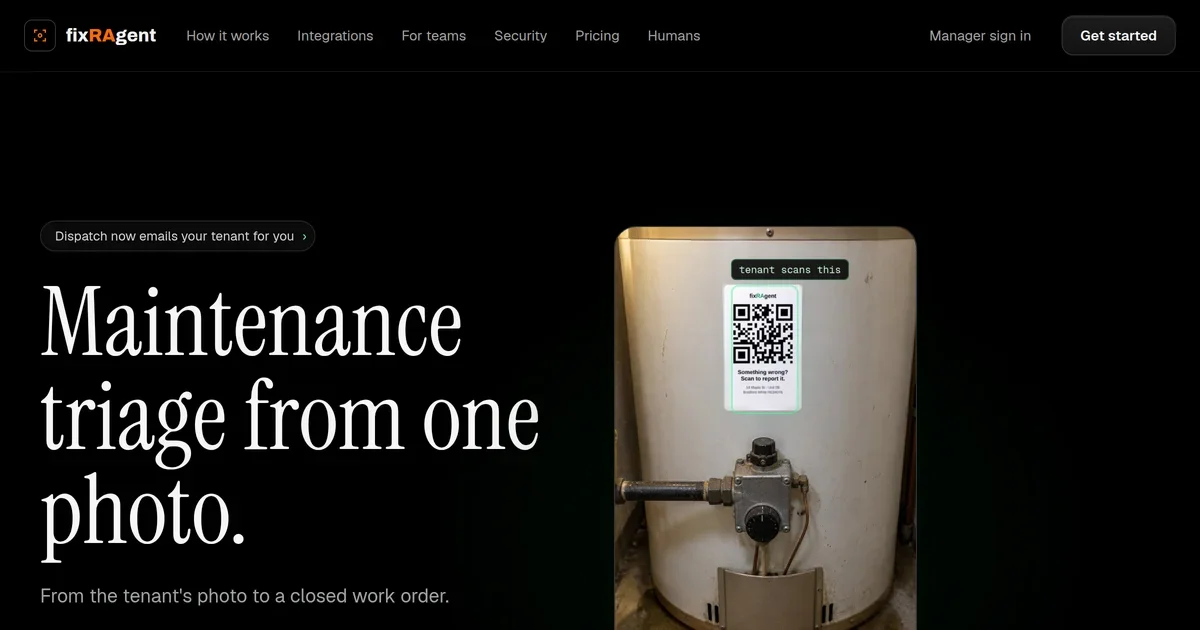
FixRAgent takes one photo of a building problem and returns a Triage Profile showing the asset type, a plain description of what is visible, one of four urgency words (EMERGENCY, TODAY, THIS WEEK, WHENEVER), the trade to call, and a line to say to the tenant who reported it. Property managers, landlords, and building teams use it to assess incoming maintenance reports before deciding which trade to contact. The profile gives back what the asset is, how urgent the issue is, who to call, and what to tell the tenant, and the call stays with the manager.
Why FixRAgent works
A tenant's words alone can hide the actual job: 'no hot water' can be a plumber, an electrician, or a gas appliance call, so the trade is decided from what the photo shows. FixRAgent reads each photo three times and reports how many reads agreed; the urgency word is set in code from fixed rules, so the same visible conditions produce the same urgency word each time.
FixRAgent features
- Triage Profile. Each submitted photo produces a profile with the asset type, a plain description of what is visible, one of four urgency words (EMERGENCY, TODAY, THIS WEEK, WHENEVER), the trade to call, a one-line reason, and a line to say to the tenant who reported it, also available in Spanish.
- Three reads per photo. FixRAgent reads each photo three times and reports how many independent reads agreed on the result, so managers can see how consistently the image was interpreted before acting on it.
- Tenant QR sticker intake. Managers paste a unit list, receive printable QR stickers for each unit, and incoming tenant photos arrive in a queue ranked by severity with worst first, accessible by emailed link with no password required.
- API with fixed JSON reply. A POST to the triage endpoint returns a fixed JSON shape with twenty core fields including asset type, urgency tier, trade required, fault summary, safety hazard flag, and a diagnosis_id that a developer maps to the work-order fields of the system already in use.
- MCP connector. The MCP connector exposes three tools: try_sample returns a stored assessment of a sample photo without a key or any input; assess_property_photo takes one photo and returns a Triage Profile; get_triage_profile reads a saved assessment back by its id.
- One-line website embed. A single script tag adds a photo drop zone to a manager's existing website so tenants can submit maintenance photos directly. The embed leaves your site without cookies and works in Wix, Squarespace, and WordPress.
Who FixRAgent is for
- Property managers handling multiple units who need to rank incoming maintenance reports by urgency before deciding which vendor to contact.
- Independent landlords who receive tenant reports directly and want a read on whether an issue requires an immediate licensed trade before making calls.
- Building management companies that want incoming tenant photos routed through a severity-ranked queue their team can access by emailed link.
- Developers building property management tools who need a triage endpoint that returns a fixed JSON shape ready to map to existing work-order fields.
Similar micro SaaS ideas you can build
- HOA common area intake tool. HOA boards and community managers who receive member-submitted maintenance photos for shared amenities and need a photo-to-urgency queue separate from residential property software; a per-report or subscription tool that assigns an urgency tier and a recommended vendor type to each submitted photo.
- Restaurant equipment fault reporter. Restaurant operators and kitchen managers who photograph malfunctioning equipment and need a quick read on urgency and which service type to call; a subscription tool built for food service operators that returns a priority word and a trade recommendation from a single photo.
- Short-term rental turnover damage intake. Vacation rental hosts and property managers who need to assess damage or maintenance issues between guest stays; a photo-to-urgency tool that generates a triage report per item and helps determine which issues require a trade before the next check-in, sold per property or as a portfolio subscription.