Idea
Search on most lists for one niche still gives you a grid where every result looks the same. You scroll, open a few tabs and close them without picking one.
The search works. It is just boring, and nobody sends a boring list to a friend.
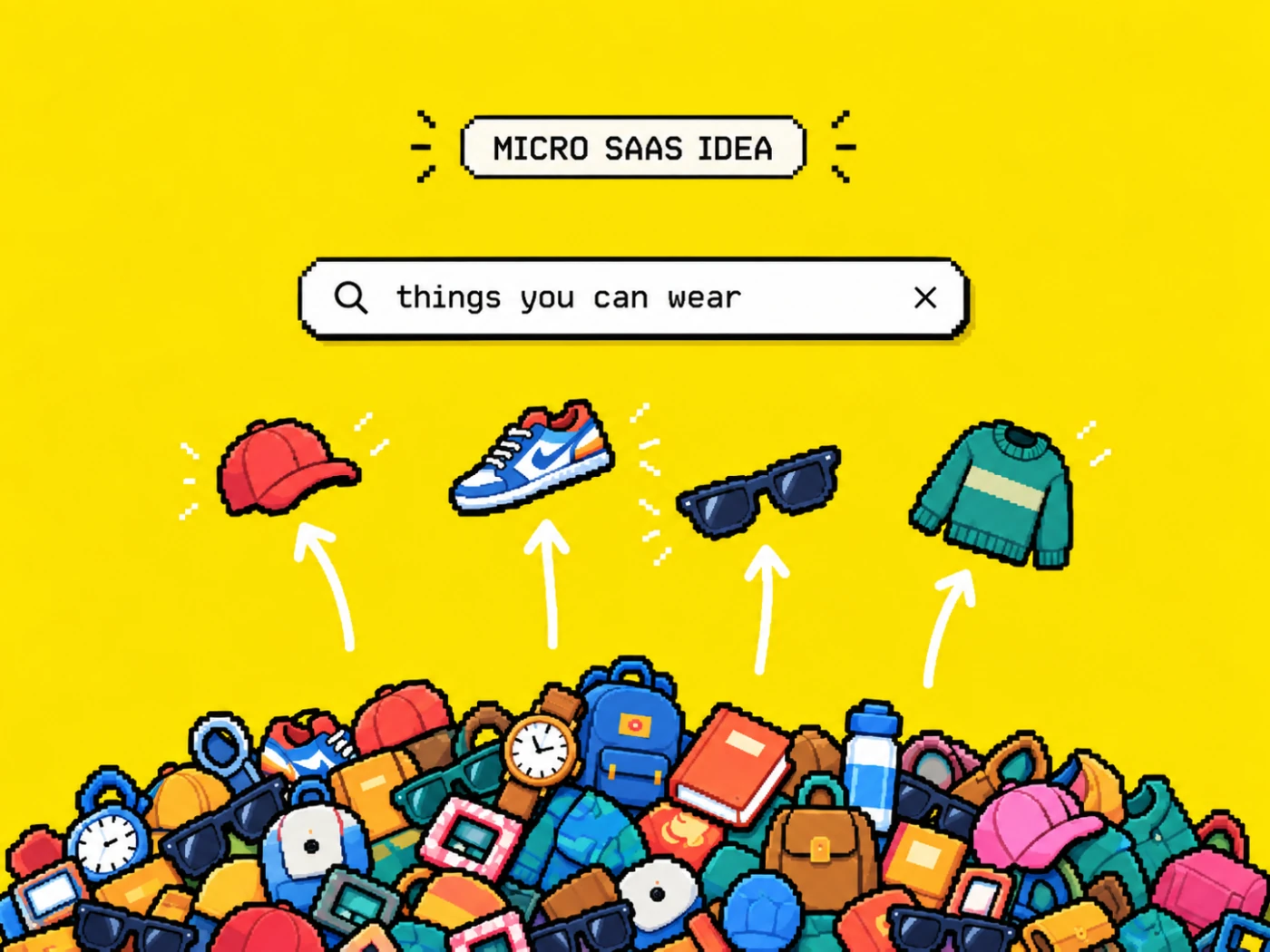
A search page for one niche where every result sits in a pile, and the best matches rise as you type. I like it because it makes a plain list fun to search again.
Type "things you can wear" and a hat and a scarf rise, though neither has "wear" in its name. The matching runs on Jev, a new AI model from TypeSafe, so it goes by meaning instead of by words.
Why now
- Jev opened in early access at $42 for 1 billion tokens of input. Matching a search by meaning is now a call you make, so you no longer build it.
- One builder put 6,000+ startups from Y Combinator, the startup accelerator, in a pile you can search. One person built a pile from a public list of startups, so the trick is not tied to one site.
- Stackfull, a site that puts the software that a company runs in a pile, had 20,129 visitors in the last 30 days. People come to search these piles in numbers that make a sponsor slot worth paying for.
- Stackfull sells 12 ad slots at $500 for 30 days, and 1 is sold. A pile already sells the spot this idea sells, so the money came with the copies.
- Outbid.lol, a public board where bids decide rank, passed $200K in revenue in its first week. People pay to rank first in a public list, and that is what a card that rises first is.
How to validate it

- Pick a niche with a free public dataset, and build a pile of 50 items in a day. Draw it with matter.js, a free JavaScript physics library. Put the same 50 items on a plain list page too, and send half your visitors to each. Pass: your analytics shows people staying on the pile page 20% longer or more.
- Post a screen recording of one search to the subreddit or X community for that niche. It works best in a niche where the makers read along, like design tools. Pass: 5 or more people ask to have their item added, within 48 hours.
- Email 3 makers in your niche whose cards are in the pile (for design tools, the makers of those tools). Offer each a sponsored card that rises first, at $99 a month. Stackfull sells its slots at $500 for 30 days, so I would start a new pile in a smaller niche at $99. Pass: 2 or more pay within 2 weeks.
- Give 10 people from the niche the name of one item, and ask them to find it by typing into the pile. Do not help. Pass: 9 of the 10 find it.
Examples like this
 outbid lolDirectory A public board where bids decide rank; this idea sells the same thing, a paid spot at the top.
 Can I Vibecode It?Directory A directory for one niche; it has sponsor slots, what this idea sells.
 LogosystemDesign A gallery of 1,200+ logos you browse as pictures, the kind of visual list a pile shows.
Tools to build it
 DirectifyFeaturedno code A no-code directory builder; it can hold the pile's items, payments and SEO. Visit
 BoringlaunchFeaturedlaunch A service that submits your startup to 100+ launch sites; gets the pile listed when you ship. Visit
 Open Source AlternativesFeaturedDirectory Curated directory of self-hosted alternatives to paid software Visit


 CaptureKitdata An API for capturing site screenshots and metadata; fills each card's image and text. Visit