What is Report Card?
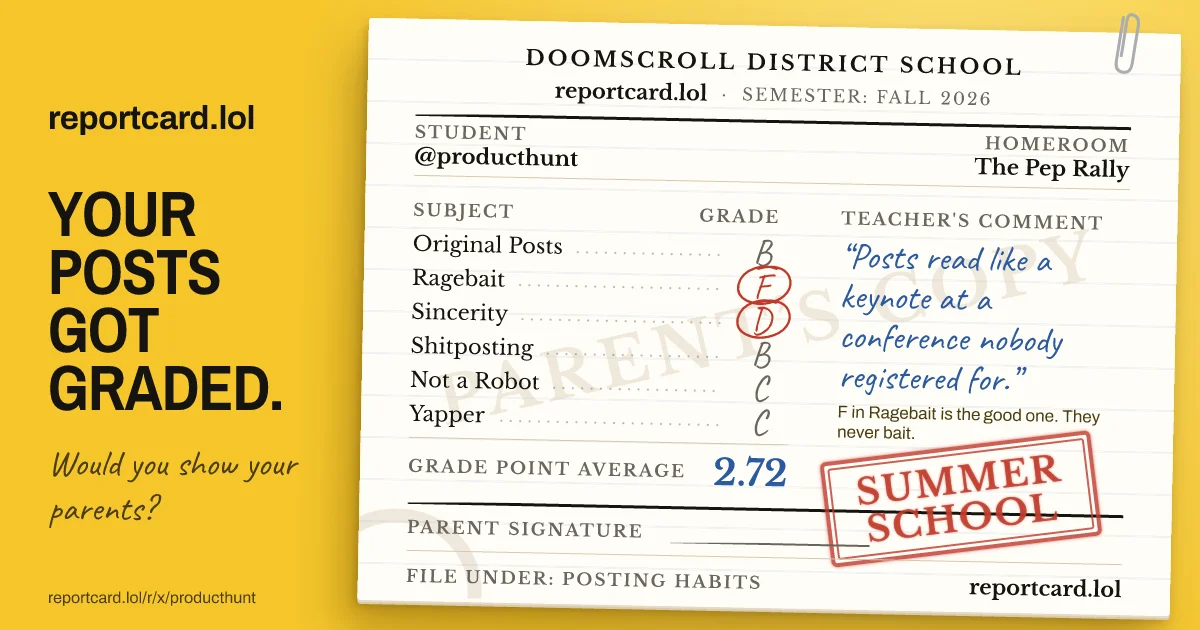
Report Card is a free web tool that grades any public X, Threads, or LinkedIn account using school-report-card framing. A visitor types in a handle and receives a printable-style card showing six subject grades, a GPA, a homeroom name, and a hand-written-style teacher's comment. Social media users, marketers, and curious observers use it to get a quick, humorous read on how an account actually behaves across categories like Sincerity, Ragebait, and Plain English.
Why Report Card works
Most social analytics tools surface numbers that require interpretation; Report Card wraps the same signal in a familiar format that communicates tone and pattern at a glance. Because the grading categories are network-specific and the teacher's comment is generated per account, each card feels accurate rather than generic. The leaderboard and shareable card format give users a reason to spread results, which drives organic discovery without paid acquisition.
Report Card features
- Network-specific grading rubrics. Each platform gets its own six-subject rubric so the grades reflect real behavior on that network rather than a generic engagement score
- GPA and teacher's comment. Every account receives a Grade Point Average and a short, voice-driven teacher's note that summarizes posting behavior in plain language
- Leaderboard by network. Public leaderboards for X, Threads, and LinkedIn show top-ranked accounts by GPA so visitors can browse without entering a handle
- No login required. The tool reads public posts only, so visitors get results in about ten seconds without creating an account or authorizing any connection
- Shareable card design. The output is styled as a printed report card with pencil grades and red-pen marks, making it easy to screenshot and share on the same networks it grades
Who Report Card is for
- Social media managers who want a fast, shareable way to benchmark a brand account's tone against competitors
- Creators on X or LinkedIn curious about how their posting patterns read to an outside observer
- Marketers building content for a niche audience who want a humor-forward piece of earned media
- Developers and indie makers looking for a reference example of a simple, viral single-purpose web tool
Similar micro SaaS ideas you can build
- Brand voice auditor. Marketing agencies could adapt the grading model into a paid report that scores a client's last 90 days of posts against tone and consistency targets, charging per audit
- Creator comparison tool. A solo developer could build a side-by-side card view so a brand can compare its account against a competitor on the same six subjects
- Newsletter segment. A media newsletter could run a weekly "worst GPA of the week" feature using the public leaderboard data as editorial fodder with no additional research needed
- Onboarding icebreaker. A community platform could embed the card format as a profile widget so new members share their report card on signup, replacing the blank-slate bio problem