What is CaptureKit?
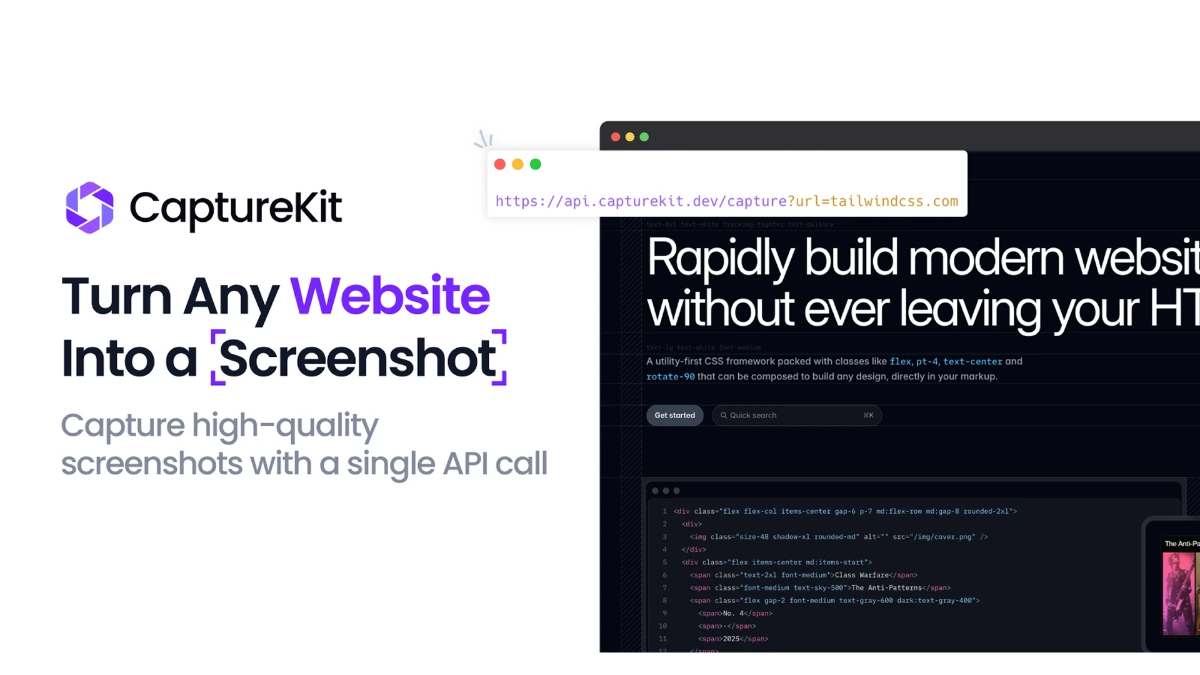
CaptureKit is a screenshot and web extraction API for developers who do not want to run their own headless browser fleet. A single request returns a pixel perfect screenshot in PNG, JPEG, WebP, or PDF and can also extract metadata, links, clean Markdown or HTML, and an AI generated summary. It is designed for backend workflows in SaaS, analytics, and AI tooling.
Why CaptureKit works
Teams that need screenshots or scraped page content usually end up maintaining Puppeteer or Playwright on their own infrastructure with all the device emulation, proxy, and bot detection issues that follow. CaptureKit handles those concerns as a managed API with edge caching so repeat captures are instant. That lets a small team ship features like link previews, compliance archives, or AI page summaries without owning the browser ops.
CaptureKit features
- Multi format screenshots. Capture full page or viewport screenshots in PNG, JPEG, WebP, or PDF from one endpoint so the same workflow serves previews, archives, and exports.
- Content and metadata extraction. Pull clean Markdown or HTML, metadata, and link graphs from any page so downstream tools work with structured input rather than raw rendering.
- AI page summaries. Generate structured summaries of the captured page so AI agents and LLM pipelines can ingest web content without a separate parsing layer.
- Device emulation library. Render against seventeen or more real device profiles so screenshots reflect what a mobile or tablet user actually sees.
- Stealth mode with residential proxies. Bypass common bot detection through residential proxies so captures complete on pages that block standard datacentre traffic.
- Edge cached delivery. Repeated requests for the same URL hit a CDN with TTLs up to thirty days so high traffic features stay fast and cheap.
Who CaptureKit is for
- SaaS engineers shipping link preview cards or compliance archives that cannot tolerate flaky in house browser automation.
- AI platform teams feeding cleaned web content and screenshots into LLM agents and retrieval pipelines.
- Marketing tooling builders generating live thumbnails of customer landing pages or competitor sites at scale.
- QA and observability teams archiving rendered states of production pages for visual regression and audit trails.
Similar micro SaaS ideas you can build
- Competitor pricing change tracker. Tool for revenue teams that captures pricing pages daily, diffs them, and alerts on changes, sold per monitored competitor.
- Visual regression service for marketing sites. Service for growth teams that screenshots every landing page nightly and flags unintended visual changes, billed per page monitored.
- AI grounded link summariser. API for newsletter and curation apps that returns a clean summary plus screenshot of any URL, priced per call.
- Compliance evidence archive. Workflow for financial services marketing teams that snapshots ad landing pages with timestamped PDFs for regulator audits, sold per archived asset.