What is Blogizi?
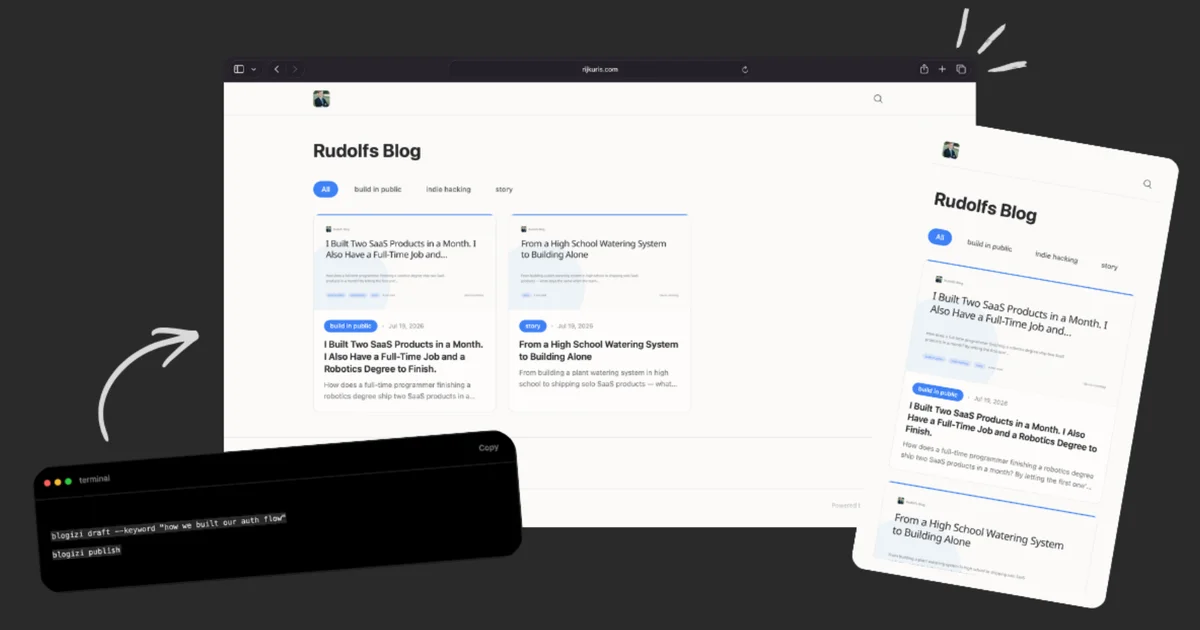
Blogizi is a hosted blog publishing platform that handles the SEO infrastructure, hosting, and domain routing so developers and AI agents only need to supply a markdown file. A CLI tool authenticates, then drafts, updates, or publishes a post in one command, covering canonical URLs, Open Graph images, structured schema markup, sitemaps, and robots.txt automatically. It is built for indie developers, AI agent workflows, and writers who work in Obsidian or any markdown editor and want a blog on their own domain without configuring a CMS.
Why Blogizi works
Setting up a blog with proper technical SEO usually means adding sitemaps, canonical tags, social images, and schema markup by hand before the first post goes out. Blogizi collapses that stack into one hosted layer: the CLI reads a markdown file and the post arrives on the domain with every SEO signal already set. Agents running in sandboxes without local file access can publish through the hosted MCP server instead, so the same workflow covers both human writers and automated pipelines.
Blogizi features
- Technical SEO on every post. Each published post gets canonical tags, Open Graph metadata, and BlogPosting JSON-LD schema markup, and the blog gets an auto-generated sitemap and robots.txt, with the option to override any SEO setting.
- Hosted MCP server. A Bearer-token-authenticated MCP endpoint at blogizi.com/api/mcp exposes tools for listing projects, drafting, updating, publishing posts, uploading images, and reading search performance, so agents such as Claude Cowork that run in a sandbox can publish without local file access.
- Google Search Console integration. Connect a property once and the dashboard shows clicks, impressions, CTR, and average position for 7, 28, and 90-day windows, synced daily and readable over the API and MCP so an agent can pull the data before writing the next post.
- Flexible domain routing. Blogs can run on a free subdomain, a custom subdomain via CNAME, or a path like yourapp.com/blog through a reverse proxy using Vercel rewrites, a Cloudflare Worker, Nginx, or Caddy.
- CLI and Obsidian plugin publishing. The npm CLI covers auth, draft, update, and publish for a markdown file; an Obsidian community plugin adds new post, frontmatter, draft upload, and publish commands inside the editor for writers who do not want to leave their notes app.
- Blog customization and analytics. Each blog supports a custom domain with no Blogizi branding, light or dark theme, accent colour, fonts, logo, favicon, blog search, tags, related posts, and a built-in analytics view covering pageviews, referrers, top posts, and visitor geography.
Who Blogizi is for
- Indie developers building a SaaS or side project who want a /blog on their own domain without configuring a CMS, sitemap tool, or OG image service separately.
- AI agent builders running Claude, Codex, or similar agents in automated pipelines who need a publish endpoint the agent can hit directly via MCP or CLI after drafting a post.
- Developers working in Obsidian or VS Code who write in markdown and want a one-command path from local file to live indexed post without touching a web dashboard.
- Founders building on Lovable, Vercel, Webflow, Framer, Replit, or Bolt who want a blog on their own domain; the site has a dedicated page for each of these platforms.
Similar micro SaaS ideas you can build
- Changelog-to-blog publisher. A CLI wrapper for SaaS teams that converts a structured CHANGELOG.md entry into a formatted blog post and publishes it to a Blogizi project on every GitHub release tag, sold as a per-seat subscription to developer teams who want SEO-indexed release notes without a separate CMS.
- Agent content pipeline dashboard. A web app that connects to a Blogizi account via the public API, shows unpublished drafts, search performance from Google Search Console, and a queue of scheduled posts, then triggers the agent to write the next post based on low-competition queries, sold per workspace to founders running content on autopilot.
- Documentation-to-blog cross-poster. A tool that watches a docs folder in a GitHub repo for new or updated pages, reformats them as blog posts with proper frontmatter, and publishes to Blogizi via the CLI on each merge, targeting developer tool companies that want their docs indexed as blog content without duplicating the writing effort.